
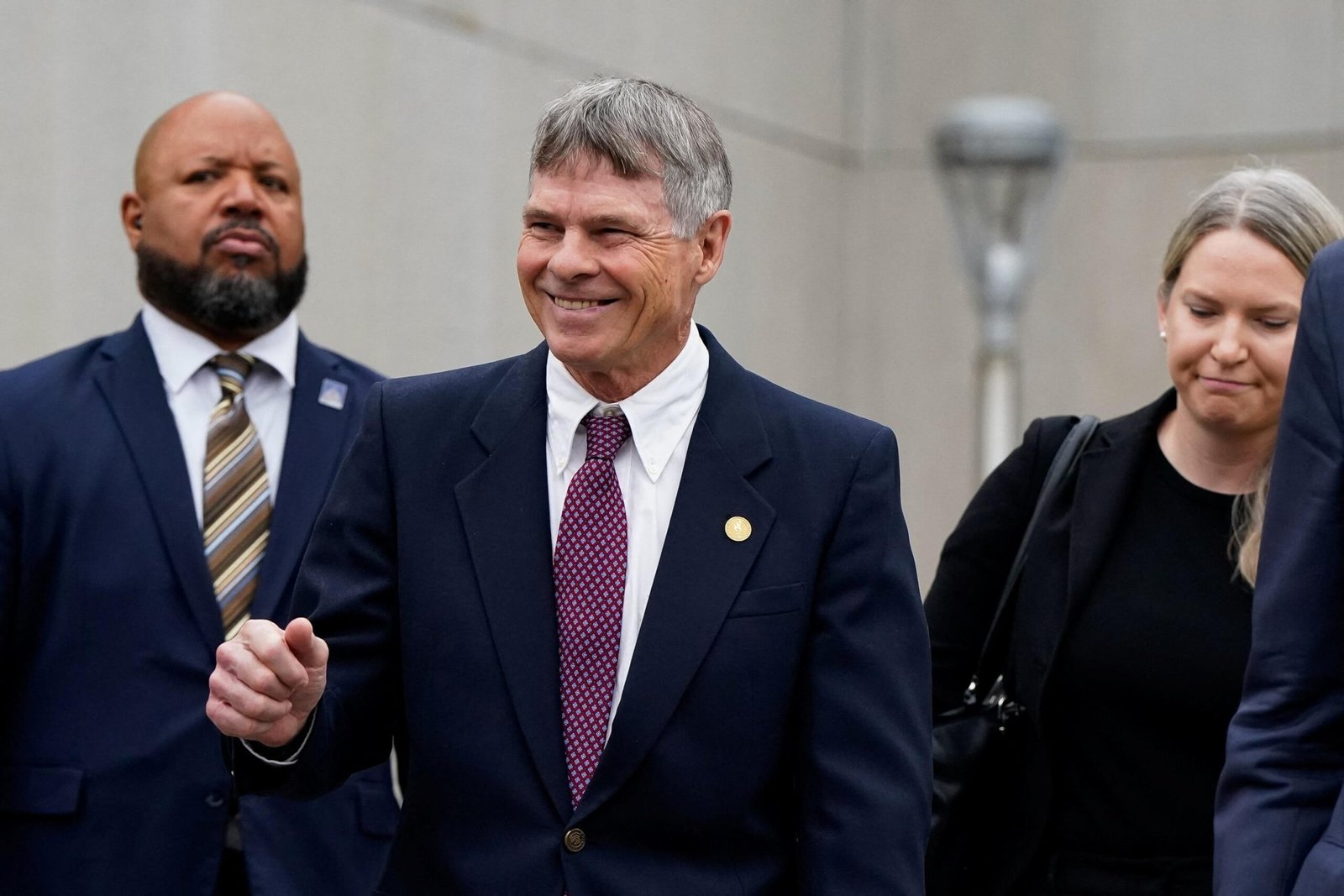
WASHINGTON, D.C. — Attorneys for former U.S. Olympian David Hearn are asking government watchdog offices to investigate how he was arrested and prosecuted over alleged damage to the Lincoln Memorial Reflecting Pool.
The request comes after prosecutors abandoned the criminal case and a D.C. Superior Court judge later dismissed it permanently. Hearn’s legal team now wants inspectors general at the U.S. Department of Justice (DOJ) and the Department of the Interior to examine what happened before and after his arrest.
The controversy began in June 2026 when Hearn, a three-time Olympic canoeist, was accused of damaging a newly installed blue coating inside the famous Washington, D.C., landmark. Federal prosecutors later acknowledged that documents from the Interior Department indicated the pool’s widespread damage was connected to a rushed and flawed installation by a contractor rather than simply vandalism.
Hearn was indicted in July on a felony destruction-of-property charge. The Justice Department subsequently moved to dismiss the case after receiving additional information about the condition of the pool and the installation process. According to prosecutors, the evidence made it difficult to establish that Hearn was responsible for the broader damage.
His attorneys say the problems go beyond one criminal case.
In a letter to the inspectors general, Hearn’s legal team alleged government misconduct, investigative failures and possible political pressure. They want the DOJ watchdog to examine how prosecutors handled evidence, the grand jury process and other aspects of the investigation.
The attorneys also asked the Interior Department’s inspector general to investigate the renovation itself. Among their questions are what department officials knew about problems with the pool liner, when they knew about them and whether important information was provided to federal prosecutors in a timely manner.
Questions Over the Reflecting Pool Renovation
The Lincoln Memorial Reflecting Pool renovation became controversial after sections of the new blue coating began peeling. The project was undertaken ahead of celebrations marking America’s 250th anniversary.
Court filings later revealed that an Interior Department engineer had raised concerns about peeling before Hearn was arrested. A June 11 email reportedly warned other officials about problems involving the coating, eight days before the June 19 incident involving Hearn.
Prosecutors later said documents obtained from the Interior Department showed repeated failures during the installation process and extensive peeling throughout the pool.
That information significantly weakened the original allegation that Hearn was responsible for the damage.
Hearn has maintained that he was simply curious about a loose piece of material in the pool. The government’s initial description of the incident portrayed the action more seriously, leading to a felony prosecution.
The case eventually ended permanently when Judge Todd Edelman dismissed it with prejudice, meaning prosecutors cannot simply reopen the same case against Hearn. The judge cited exceptional circumstances surrounding the prosecution and concerns raised by the defense about how quickly the case had been brought.
Attorneys Want Accountability
Hearn’s lawyers argue that dismissing the criminal case does not answer the larger questions surrounding his arrest and prosecution.
They are asking the DOJ inspector general to examine whether prosecutors had access to evidence that could have affected the decision to seek an indictment. The attorneys have also raised questions about grand jury testimony, disclosure of evidence and interactions involving prosecutors and a defense expert.
The Interior Department has disputed some of Hearn’s lawyers’ characterization of events. A department spokesperson said Hearn admitted to officers that he was tampering with the Reflecting Pool. His attorneys strongly dispute that description and say he only touched a loose section of the pool’s liner.
So far, the watchdog offices have not announced whether they will open formal investigations. The DOJ inspector general’s office declined to comment on whether it would act on the request, while the Interior Department’s inspector general had not immediately responded to an inquiry reported Tuesday.
The case has attracted broader attention because it combines questions about federal prosecution, government accountability, public infrastructure and political pressure surrounding one of America’s most recognizable landmarks.
For Hearn and his attorneys, the focus has now shifted from defending against a criminal charge to finding out how the case happened in the first place.