
US Navy Helicopter Crash Report in Red Sea Denied by CENTCOM
A report claiming that a U.S. Navy helicopter crashed in the Red Sea has been rejected by U.S. Central Command (CENTCOM), which said the reports circulating through Iranian state media were false.
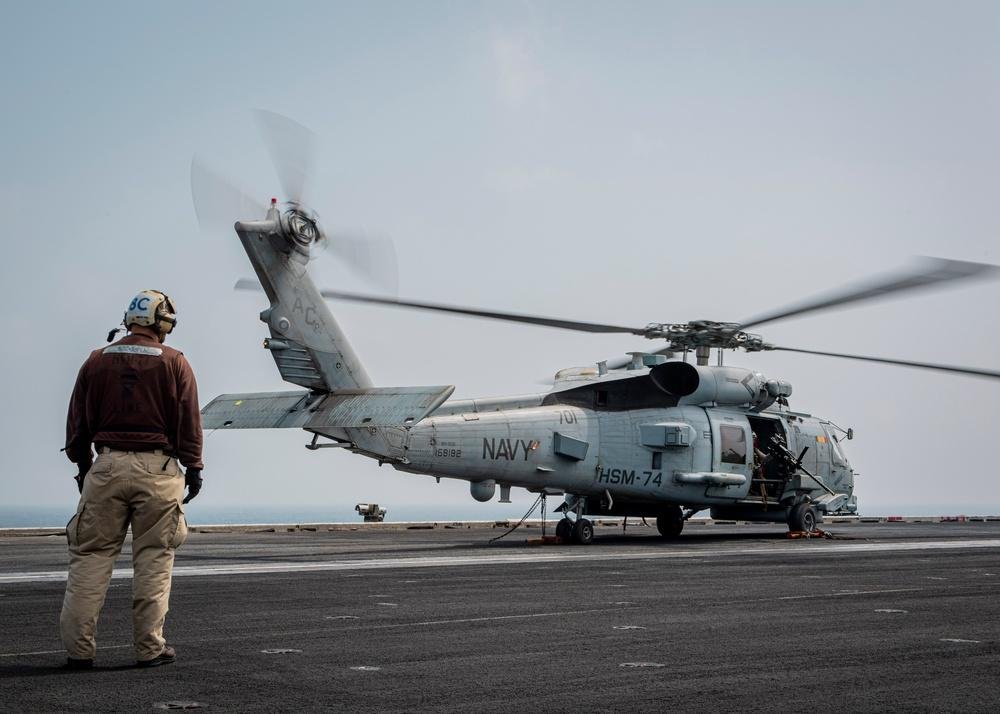
The controversy began after a U.S. Navy MH-60R Seahawk helicopter reportedly declared an emergency while flying over the Red Sea near Yanbu, Saudi Arabia, on October 5. Public flight-tracking data showed the aircraft transmitting squawk code 7700, an internationally recognized signal indicating a general emergency. The aircraft later disappeared from publicly available tracking data, prompting speculation online about a possible crash.
However, CENTCOM moved to address the reports directly on October 6, saying that claims of a downed U.S. Navy helicopter were not true.
CENTCOM rejects helicopter crash reports
In a fact-check post, U.S. Central Command said Iranian state media had been promoting false reports about an MH-60R helicopter crash in the Red Sea.
CENTCOM stated that reports of a downed U.S. Navy helicopter were false and said that all U.S. military aircraft and personnel across the Middle East were safe and accounted for.
The statement came after Iranian outlets, including IRIB and other media organizations, reported that an American military helicopter had allegedly gone down after declaring an emergency.
The Iranian reports appeared to rely partly on publicly available aircraft-tracking information. According to reports, the helicopter was flying near Yanbu on Saudi Arabia’s western coast when the emergency signal was transmitted. Its tracked altitude was reported at roughly 475 feet before the publicly visible tracking information changed and eventually disappeared.
Why did the crash reports spread?
The situation illustrates how quickly uncertainty surrounding military aircraft can generate speculation.
The MH-60R Seahawk is a U.S. Navy multi-mission helicopter commonly used for maritime operations, surveillance, anti-submarine warfare and other naval missions. When the aircraft transmitted the 7700 emergency code, people monitoring public flight-tracking services noticed the unusual event.
The disappearance of the aircraft from publicly available tracking data then fueled claims on social media and in some Iranian media outlets that the helicopter had crashed into the Red Sea.
But a 7700 emergency transmission does not automatically mean an aircraft has crashed. It simply indicates that the crew has declared a general emergency and requires attention. The exact reason for the emergency was not immediately made public.
U.S.-Iran tensions add to the speculation
The helicopter story comes at a particularly sensitive time in the Middle East, with U.S.-Iran tensions, military activity and fighting involving Iran-backed Houthi forces continuing across the region.
The Red Sea remains strategically important because it connects major international shipping routes through the Bab el-Mandeb Strait. Military operations in and around the Red Sea have increased attention on American naval aircraft, warships and commercial shipping.
Recent fighting in Yemen has also raised concerns about maritime security. The Houthis have been involved in attacks and military operations around the Red Sea, while Saudi-backed forces have launched a campaign aimed at regaining strategic territory near the Red Sea and Bab el-Mandeb.
That broader military environment likely contributed to the rapid spread of speculation surrounding the U.S. Navy helicopter.
No confirmed U.S. Navy helicopter crash
For now, the most important point is that CENTCOM has denied that the U.S. Navy MH-60R crashed or was shot down.
The command’s statement is the latest official information available regarding the incident. It also specifically said that U.S. military aircraft and personnel operating across the Middle East were safe and accounted for.
The episode also highlights the difficulty of interpreting publicly available military flight-tracking information. Military aircraft can disappear from civilian tracking platforms for several reasons, and an emergency transmission alone cannot establish that an aircraft has been lost.
As tensions remain high across the Middle East, officials and news organizations are likely to face continued challenges in separating confirmed military developments from unverified claims circulating online.
For readers following the U.S. Navy Red Sea helicopter news, the latest confirmed position is therefore straightforward: CENTCOM says the reported crash did not happen and that U.S. military aircraft and personnel remain safe and accounted for.