
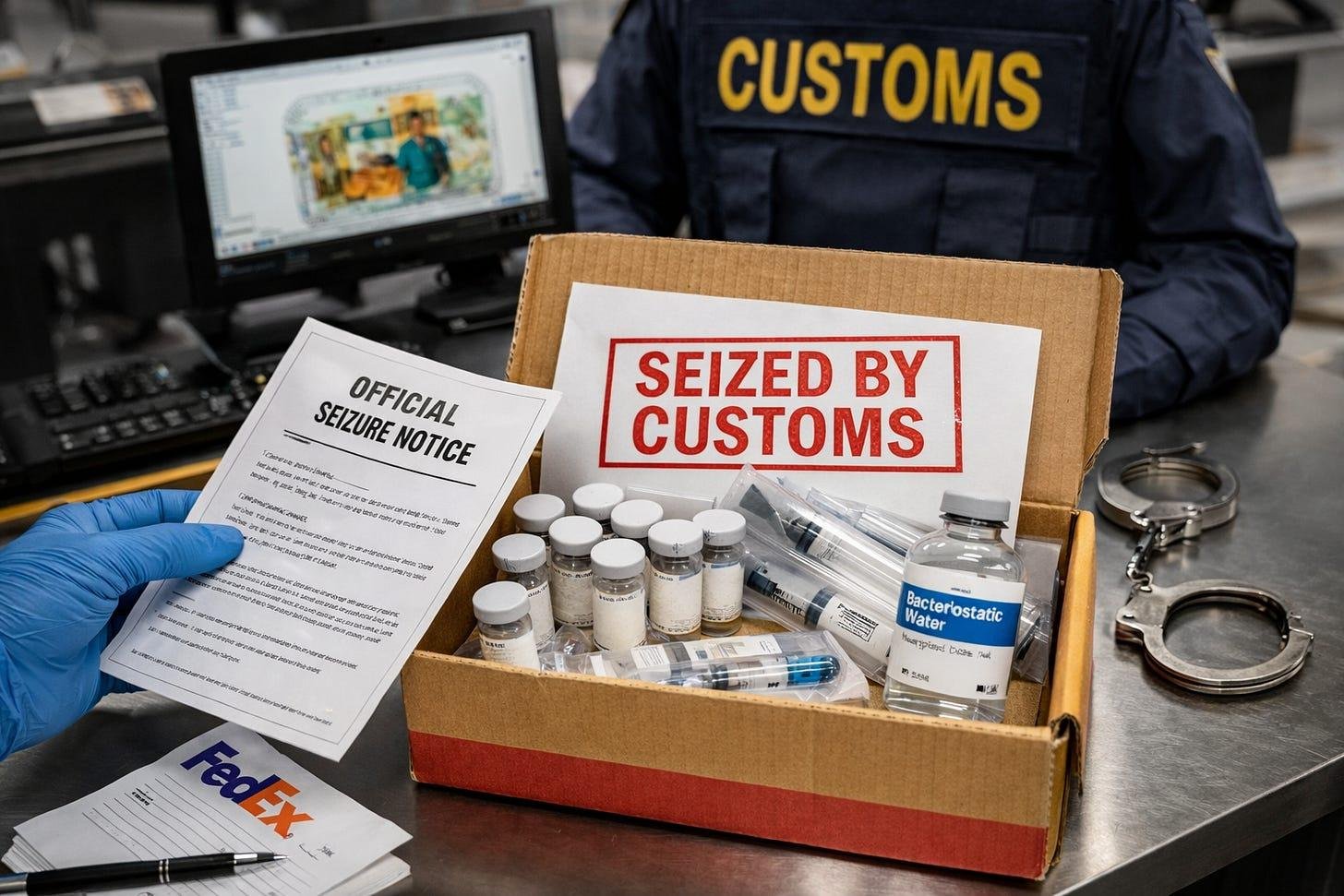
A growing U.S. health and drug-safety concern is emerging around the online sale of unapproved peptides. Some Chinese chemical manufacturers previously associated with the supply of fentanyl precursor chemicals are now selling peptides directly to customers in the United States, according to new research from blockchain analytics firm TRM Labs and reporting by The Wall Street Journal.
The development comes as Americans increasingly search online for peptides for weight loss, anti-aging, muscle recovery and other health benefits. Many of the products being promoted online have not been approved by the U.S. Food and Drug Administration (FDA), raising concerns about product quality, labeling and consumer safety.
Chinese chemical suppliers move into the peptide market
TRM Labs has been tracking Chinese chemical manufacturers that accept cryptocurrency payments. Its latest research identified more than 150 Chinese chemical manufacturers accepting crypto payments, with roughly 75% of those identified as listing both peptides and fentanyl precursor chemicals on their websites.
The research does not mean that every peptide sold by a Chinese supplier is illegal or dangerous. However, investigators say the overlap between vendors connected to the fentanyl-precursor trade and the growing gray-market peptide industry deserves attention.
One company highlighted in the reporting is Anhui Rencheng Technology, which was charged by U.S. authorities in 2023 in connection with alleged fentanyl precursor activity. Its website has also been found advertising products including Melanotan II and semaglutide-related products.
The company did not respond to requests for comment cited in the reporting.
Why Americans are buying peptides online
The popularity of peptides has grown rapidly in the United States, particularly following the success of GLP-1 weight-loss medicines.
Consumers are increasingly searching for terms such as peptides for weight loss, GLP-1 peptides, anti-aging peptides, research peptides and peptides for muscle recovery.
The problem is that online advertisements can make experimental or unapproved substances appear similar to legitimate prescription medications.
Some products are sold under labels such as “research use only” or “not for human consumption.” Despite those warnings, some buyers reportedly obtain the substances for personal use.
Health experts warn that a laboratory label does not establish that a product is safe for injection or effective for treating a medical condition. Unapproved products may have problems involving purity, strength, contamination or incorrect labeling.
Cryptocurrency is playing a role
Another important part of the developing market is cryptocurrency.
TRM Labs found that payments to Chinese vendors selling both peptides and fentanyl precursors have increased substantially. The value of crypto payments to the vendors it tracked rose from about $28.2 million in 2023 to $37.3 million in 2025, an increase of roughly 32%.
The United States was also the largest identifiable source of buyer funds in TRM’s analysis. Researchers caution, however, that blockchain transactions do not always reveal the physical location of buyers, so the figure represents only transactions that could be linked to a country.
U.S. authorities are intercepting shipments
Federal authorities are also seeing an increase in unapproved pharmaceutical shipments entering the country.
According to the latest reporting, U.S. Customs and Border Protection intercepted thousands of peptide shipments connected to a packaging technique sometimes called “master cartons.” In one Cincinnati investigation, authorities reportedly stopped roughly 400 smuggling attempts involving nearly 6,000 pre-labeled peptide shipments.
CBP has separately publicized seizures of large quantities of unapproved pharmaceutical products, including weight-loss injections and other medical products.
The issue is part of a broader challenge for U.S. regulators: online sellers can operate internationally, advertise directly to American consumers and use payment and shipping networks that make enforcement more difficult.
FDA approval remains an important difference
It is important to distinguish between an FDA-approved peptide medication and an experimental or unapproved peptide sold online.
Peptides are a broad class of substances. Some legitimate medicines, including insulin and certain GLP-1 drugs, are peptide-based and have gone through regulatory review.
Other substances promoted online have not undergone the same approval process.
The FDA has expressed concern about the sale of unapproved drug products marketed as peptides to American consumers.
For consumers, the biggest warning sign is not simply that a product is called a “peptide.” Instead, buyers should determine whether the specific product is approved for human use, whether it comes from a legitimate pharmacy or healthcare provider, and whether its source and labeling can be verified.
A growing U.S. drug-safety concern
The shift by some chemical manufacturers from fentanyl precursor sales toward the peptide market highlights how quickly illicit or gray-market businesses can adapt to consumer demand.
U.S. authorities have spent years targeting Chinese companies accused of supplying precursor chemicals used to manufacture fentanyl. The Justice Department has previously alleged that China-based chemical companies used online advertising, cryptocurrency payments and concealed shipping methods to move precursor chemicals.
Now, investigators are watching the rapidly expanding unregulated peptide market in the United States.
For Americans considering peptides for weight loss, bodybuilding, anti-aging or other purposes, experts say the safest approach is to avoid products from unknown online sellers and discuss legitimate treatment options with a qualified healthcare professional.
The growing market may offer consumers more choices, but regulators and health experts warn that cheap online peptides can come with significant uncertainty about what is actually inside the vial.