
Former NFL quarterback Joe Montana made a very different kind of winning move after his football career: he invested in technology startups. One of his most notable bets came in 2015, when his venture firm, Liquid 2 Ventures, invested about $100,000 in GitLab, then a relatively small coding and software-development startup.
Six years later, GitLab went public on the Nasdaq and reached a valuation of roughly $11 billion, turning Montana’s early investment into one of the more talked-about celebrity venture-capital success stories.
From NFL Superstar to Startup Investor
Montana is best known for his legendary career with the San Francisco 49ers, including four Super Bowl victories. But after retiring from football, he became increasingly interested in the world of venture capital.
His path into startup investing was helped by Silicon Valley investor Ron Conway, who introduced Montana to early-stage technology investing. In 2015, Montana attended a Y Combinator event where he met GitLab co-founder and CEO Sid Sijbrandij.
At the time, GitLab looked very different from the publicly traded software company people would know several years later.
The company had started as an open-source project in 2011 and was formally incorporated in 2014. During the 2015 period, GitLab had only about 10 employees but already had hundreds of open-source contributors and several recognizable business customers.
Montana and his partners saw potential early.
Liquid 2 Ventures invested approximately $100,000 as part of GitLab’s 2015 seed financing. GitLab announced a $1.5 million seed round led by investors including Khosla Ventures, 500 Startups, CrunchFund, Sound Ventures and Liquid 2 Ventures.
GitLab’s Rapid Growth
GitLab’s business grew quickly over the next several years.
The platform allowed developers and companies to manage software code, collaborate with teams and eventually handle much more of the software development lifecycle. GitLab expanded beyond basic code management into a broader DevOps platform, bringing development, operations, security and other functions together.
The company also embraced remote work well before it became a major trend in the technology industry.
By 2021, GitLab had become a major player in the software-development market. Its growth attracted significant investor attention as the company prepared for an initial public offering.
The contrast was striking: a startup that had been valued at roughly $12 million around its 2015 seed round was preparing to enter the public market at a multibillion-dollar valuation.
GitLab IPO Put the Investment in the Spotlight
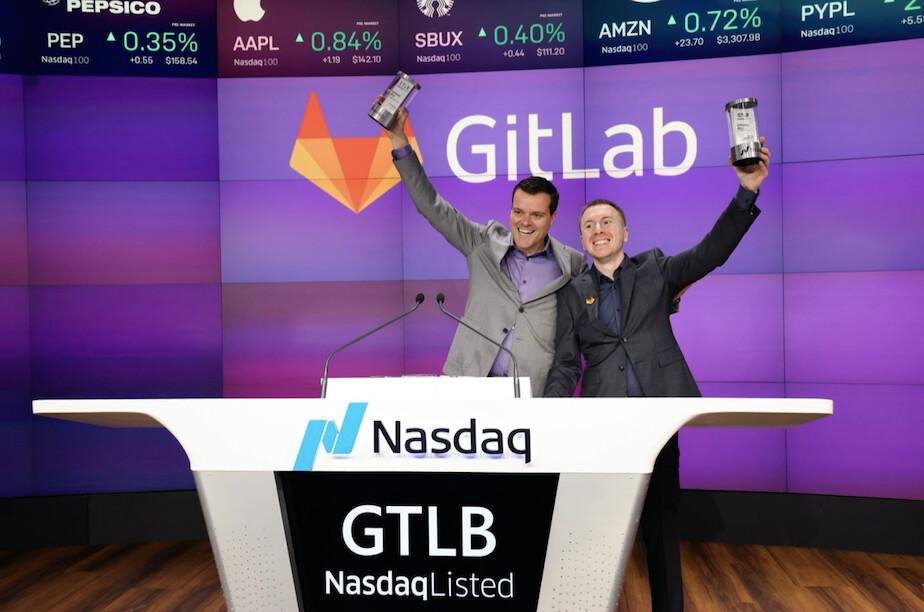
GitLab priced its IPO at $77 per share in October 2021 and began trading on the Nasdaq under the ticker GTLB on October 14. The company raised hundreds of millions of dollars through the offering.
Before the final IPO pricing, analysts estimated that GitLab could reach a fully diluted valuation of more than $11 billion.
That valuation dramatically changed the potential value of Montana’s early investment.
Reports at the time estimated that Montana’s original $100,000 investment, together with follow-on funding, could be worth approximately $42 million at a $69 share price. The actual value moved higher after GitLab began trading, with the stock closing its first trading day at $103.89 in one widely reported calculation.
That is an important distinction: the figures represent estimated investment value based on market prices, not necessarily cash that Montana personally received from selling shares.
A Lesson in Startup Investing
The GitLab investment became an example of the potential rewards of early-stage startup investing.
Montana did not build GitLab, and his investment was far from guaranteed to succeed. At the time, the company was still a young technology startup competing in a rapidly changing software market.
GitLab also wasn’t profitable when it went public. During the first half of 2021, the company reported revenue of $108.1 million but recorded a net loss of about $69 million. Investors were essentially betting on the company’s future growth and its ability to become a major enterprise software platform.
That makes the story more interesting than simply saying a famous athlete made money from a tech company.
It shows why venture capital investing is often described as a long-term game. A relatively small investment in an unknown startup can potentially become extremely valuable if the company develops a successful product, attracts customers and eventually reaches the public markets.
For Joe Montana, GitLab became one of the strongest examples of his transition from NFL legend to technology investor.
His $100,000 startup bet in 2015 helped demonstrate that his biggest post-football wins were not necessarily happening on a football field—they were happening in Silicon Valley.