
Trump’s Red-Dyed Diesel Order Could Offer Temporary Relief, but Bigger Fuel Problems Remain
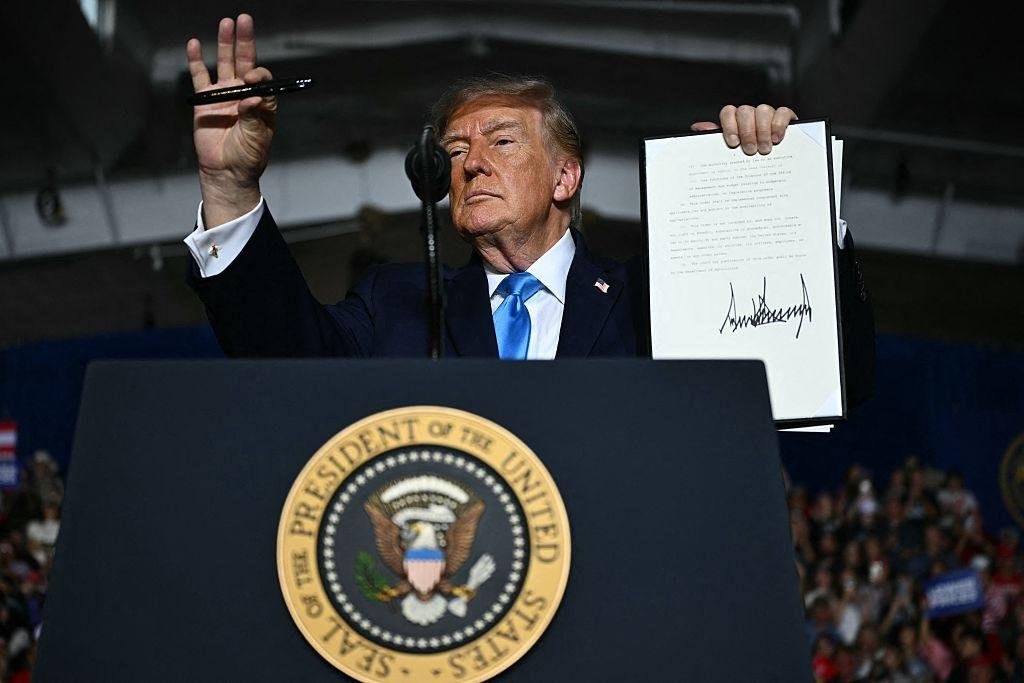
President Donald Trump has signed a new executive order aimed at reducing the financial pressure caused by unusually high diesel fuel prices in the United States. The order temporarily expands access to red-dyed diesel, a fuel that has traditionally been reserved for off-road uses such as farming, construction and certain industrial equipment.
The move is designed to help truckers, farmers and other diesel users as fuel prices remain elevated. However, energy analysts say the policy may not lead to a major nationwide drop in diesel prices because the biggest problem facing the market is supply rather than taxes.
What is red-dyed diesel?
Red-dyed diesel is essentially the same type of diesel fuel used in many regular vehicles. The major difference is that it contains a red dye that identifies it as fuel intended for tax-exempt, off-road use.
Traditionally, red diesel has been used in farm machinery, construction equipment and other vehicles that do not normally travel on public highways. The dye allows authorities to identify fuel that has not been subject to the normal highway fuel taxes.
Under Trump’s new order, the federal government is temporarily easing restrictions on the highway use of dyed diesel through the end of 2026. The White House says the policy is intended to provide immediate relief to Americans dealing with high fuel costs.
How much could truckers save?
The federal diesel excise tax is about 24.4 cents per gallon, meaning drivers who can legally access tax-exempt dyed diesel could potentially save that amount on the federal portion of the fuel cost. Some states also have their own diesel taxes, so the total potential savings can vary considerably.
The White House has said a typical trucker could save more than $100 per refill, depending on the amount of fuel purchased and other factors.
Trump has also argued that cheaper diesel could eventually reduce transportation expenses and help lower the cost of goods, including groceries.
But that does not necessarily mean consumers will immediately see cheaper prices at supermarkets or gas stations.
Will Trump’s diesel tax relief actually lower fuel prices?
This is where economists and energy analysts are more cautious.
Patrick De Haan of GasBuddy has argued that supply is a bigger problem than taxes in the current diesel market. If the United States does not have enough diesel available, simply changing the tax treatment does not create additional fuel.
Reuters previously reported that expanding access to red-dyed diesel could provide some relief to individual users but would not fundamentally change the wholesale diesel price or underlying supply conditions.
ABC News also reported that analysts expect the savings to be relatively modest for many farmers because farmers already have broad access to tax-exempt diesel for agricultural equipment.
Why farmers may see limited additional savings
American farmers are among the biggest users of off-road diesel, particularly during planting and harvest seasons. In many states, agricultural operations already receive tax advantages for diesel used in qualifying equipment.
The new policy could be more significant for farmers who need to move agricultural products on public roads or for other diesel users who previously could not take advantage of tax-exempt fuel.
Nebraska, for example, has already taken separate steps related to dyed diesel and agricultural transportation, showing how state rules can affect the practical value of the federal policy.
State rules could create complications
One important issue is that the Trump diesel order does not automatically eliminate every state diesel tax or state restriction.
The federal government is encouraging states to cooperate, but states have their own tax laws and enforcement systems. That could create different rules from one state to another.
For long-haul truckers crossing several states, this could become particularly complicated if dyed diesel is treated differently across state lines.
The executive order also defers certain federal tax obligations rather than simply declaring every deferred tax permanently forgiven. The Treasury Department has been directed to determine the details and explore ways to eliminate the deferred obligations.
What does this mean for U.S. consumers?
For American consumers, the biggest question is whether lower diesel expenses will eventually reduce the price of transported goods.
Diesel powers a huge part of the U.S. transportation and agricultural economy. Trucks move food, building materials, consumer products and industrial goods across the country. Therefore, sustained diesel savings could eventually help businesses control transportation expenses.
Still, Trump’s red-dyed diesel policy is unlikely to solve the broader U.S. diesel price problem by itself. Global fuel supply, refinery capacity, international conflicts and crude oil markets continue to have a much larger influence on wholesale diesel prices.
The order therefore provides a possible short-term diesel tax relief measure, rather than a complete solution to America’s high fuel costs.