
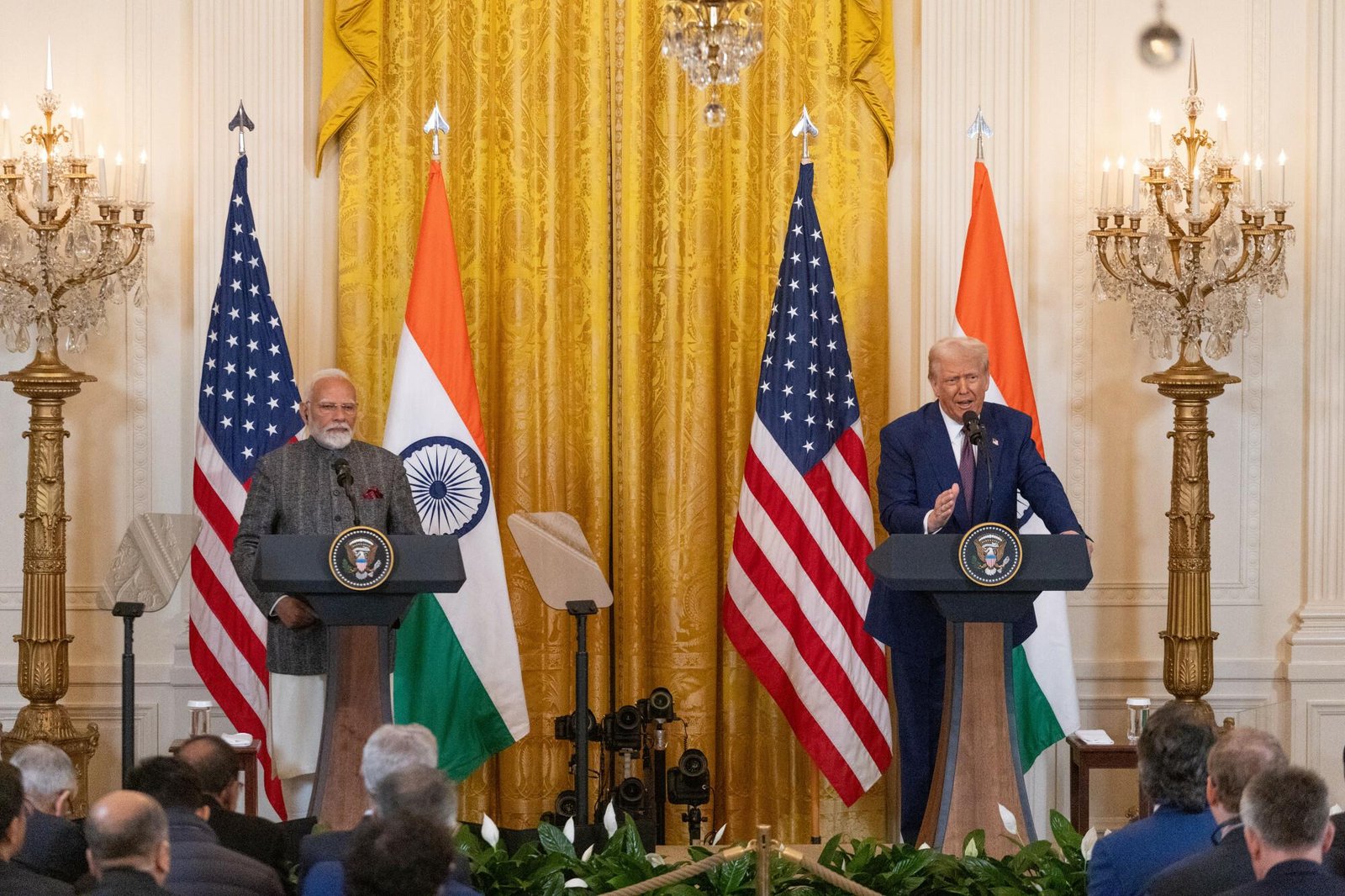
WASHINGTON — Trade relations between the United States and India remain unsettled as both countries continue discussions on a potential trade agreement, while a new U.S. law targeting buyers of Russian energy adds another layer of uncertainty.
India’s Finance Ministry said in its September 2026 Monthly Economic Review that trade relations with the U.S. remain unsettled following the passage of the Lindsey O. Graham Sanctioning Russia and Iran Act of 2026 and its signing into law by President Donald Trump.
What the New Law Does
The law, signed on September 18, 2026, gives the U.S. president authority to impose tariffs of up to 100% on imports from certain countries that purchase Russian crude oil or natural gas. The legislation is designed to increase economic pressure on Russia and limit revenues connected to its energy exports.
India is particularly affected by the measure because it remains a major buyer of Russian crude. Reuters reported that the new sanctions legislation has created additional uncertainty for India’s energy policy and its relationship with Washington.
Also Read: Rising Prices Become a Major Concern for Americans Ahead of the 2026 Midterms
India-U.S. Trade Talks Continue
The sanctions issue comes while Washington and New Delhi are still working toward an interim trade agreement.
Indian Commerce and Industry Minister Piyush Goyal met U.S. Trade Representative Jamieson Greer in Milwaukee on October 1 during the G20 Trade Ministers’ Meeting. The two sides are continuing discussions aimed at advancing an India-U.S. bilateral trade agreement.
India and the United States have been negotiating trade terms for months, but the two governments have not yet reached a final agreement. New Delhi has also raised concerns that tariffs connected to Russian oil purchases could affect bilateral relations.
Why Russian Oil Matters to India
Russian crude has become an important part of India’s energy supply. Any major change in the cost or availability of that oil could affect India’s import bill, fuel prices and broader economic conditions.
India’s Finance Ministry has also warned that higher oil prices could increase inflationary pressure and put additional pressure on the Indian rupee. The ministry’s latest review said geopolitical tensions, elevated crude prices and changing global financial conditions could create near-term economic challenges.
The issue is therefore not limited to trade between Washington and New Delhi. Energy prices and global financial markets could also influence the wider economic picture.
India Raises Concerns With Washington
Indian officials have already expressed concerns about the possible impact of the new sanctions law.
Foreign Secretary Vikram Misri reportedly raised India’s concerns about the legislation and its potential effects on bilateral relations and the international energy market during a meeting with a U.S. congressional delegation.
India has argued that its energy decisions are closely connected to domestic economic needs. The new U.S. law could make those decisions more complicated if additional tariffs are imposed.
At the same time, the U.S. legislation gives the president discretion over whether and how such tariffs are applied. The law therefore does not automatically mean that a 100% tariff will be imposed on Indian goods.
Global Economic Pressure Adds to the Uncertainty
The Finance Ministry’s report also pointed to wider economic challenges.
Oil prices rose during September, while global bond yields moved higher. The ministry said these developments could affect India’s currency, inflation and capital flows. India’s foreign-exchange reserves, however, stood at about $765.9 billion as of September 18, providing a significant buffer against external pressures.
India’s trade numbers have remained relatively strong despite the uncertainty. The Finance Ministry said total exports reached a record $82.7 billion in August, while imports stood at $92.1 billion. Services exports helped offset a large part of the merchandise trade deficit.
What Happens Next?
For now, U.S.-India trade discussions are continuing while both governments consider the implications of the Russia sanctions law.
The coming negotiations could provide more clarity about tariffs, energy trade and the proposed bilateral trade agreement. Meanwhile, India’s government will have to balance its energy requirements with the potential impact of U.S. trade measures.
The situation remains fluid, and the final economic impact will depend on how the United States implements the new law and how India and the U.S. resolve their ongoing trade negotiations.
In short: the new Russia sanctions law has added uncertainty to an already unfinished U.S.-India trade discussion. Both countries continue to negotiate, while India’s dependence on Russian crude makes the sanctions issue particularly important for its energy costs, trade policy and broader economic outlook.