
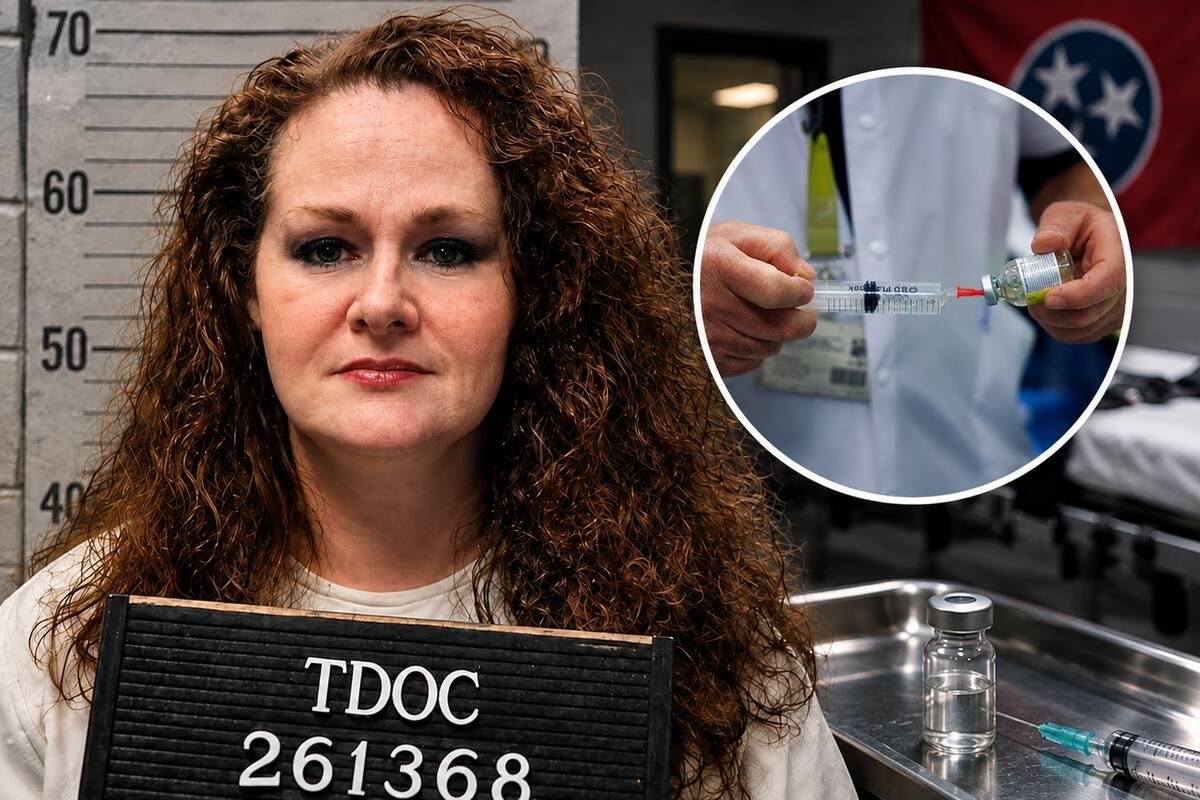
Christa Pike is alive, awake and speaking after Tennessee’s failed execution attempt, according to her attorneys. The 50-year-old Tennessee death row inmate survived a lethal injection on September 30 and is now receiving medical treatment in a hospital. Her lawyers said Tuesday that she has regained consciousness after spending days unconscious and on a ventilator.
Pike’s condition is being closely watched after the unprecedented incident raised major questions about lethal injection, death penalty procedures and Tennessee’s execution protocol.
Christa Pike latest update
Pike’s attorneys said she is now conscious and able to speak, although her long-term medical prognosis remains uncertain. They said she continues to receive critical care and could face a lengthy recovery.
According to her legal team, Pike suffered serious injuries to both arms during the failed execution. Her lawyers have alleged that problems with intravenous access may have caused the lethal-injection drug to enter surrounding tissue instead of being delivered properly into a vein. The Tennessee Department of Correction, however, has maintained that officials followed the state’s established execution protocol.
The latest development marks a significant change from earlier reports. Following the September 30 execution attempt, Pike was unconscious and placed on a ventilator as doctors treated her after she received two doses of pentobarbital.
What happened during the failed execution?
Pike was scheduled to be executed at the Riverbend Maximum Security Institution in Nashville for her conviction in the 1995 murder of 19-year-old Colleen Slemmer.
Witnesses reported that Pike remained alive after the lethal injection drugs were administered. Media witnesses heard breathing and other sounds during the procedure, and the execution was ultimately stopped. She was later transported to a hospital for emergency medical care.
The incident has been described as an extremely unusual case because Pike is reportedly the first known person to survive after receiving execution drugs as part of a lethal injection attempt. Earlier failed executions in the United States generally involved problems establishing an IV before lethal drugs were administered.
Tennessee halts executions
The failed Christa Pike execution has also affected Tennessee’s broader death penalty schedule.
Gov. Bill Lee announced that the state’s remaining scheduled executions for 2026 would be halted while an independent review examines what happened. Tennessee also announced changes involving its corrections leadership following the incident.
The governor has ordered a third-party investigation to determine whether the state’s execution procedures were properly followed and whether changes are necessary.
The Tennessee Department of Correction has said its staff followed the lawful execution protocol. The agency also confirmed that Pike was transported to an outside medical facility following the failed procedure.
Pike’s lawyers seek legal action
Pike’s attorneys are now seeking preservation of evidence connected to the failed execution. They want records, drug information and other materials related to the September 30 procedure preserved while questions about the execution are investigated.
Her legal team is also asking Tennessee officials to consider changing her death sentence to life without parole.
The lawyers previously raised concerns about Pike’s medical condition and the potential difficulty of carrying out a lethal injection. Those concerns included issues involving her veins and other medical factors.
A court hearing is scheduled to address the evidence-preservation request and the ongoing legal issues surrounding the failed execution.
Why the Christa Pike case is attracting national attention
Pike’s case has become a major U.S. death penalty news story because of the unusual failure of the execution and the questions surrounding what happens next.
She was 18 years old when Slemmer was murdered in 1995 and has spent more than three decades on death row. Her attorneys have previously highlighted her history of childhood abuse and mental-health problems while seeking clemency.
The execution had also attracted attention because Pike would have been the first woman executed by Tennessee in more than 200 years.
For now, Pike remains hospitalized. Her attorneys say she is awake and speaking, but doctors have not provided a clear long-term prognosis publicly.
The failed execution has left Tennessee facing difficult questions about its lethal injection protocol, death penalty procedures and the legal future of Christa Pike. The independent investigation and upcoming court proceedings could determine what happens next.