
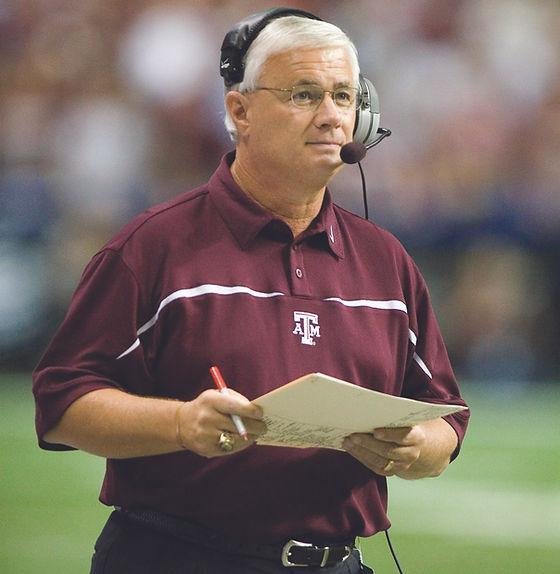
Dennis Franchione cause of death has been reported as complications following a long battle with cancer. The former Texas A&M, Alabama and TCU head football coach died Tuesday, October 6, 2026, at age 75, according to his family and TCU. Franchione had battled cancer for years, with diagnoses reported in 2016 and 2021. Family friends said the cancer returned earlier in 2026 and that he later entered hospice care.
The death of Dennis Franchione marks the loss of one of the most experienced coaches in college football. Over a coaching career that stretched across more than three decades, Franchione became known for rebuilding struggling programs and developing players and coaches who later made major contributions to the sport.
Dennis Franchione Cause of Death
Franchione’s family confirmed his death after a recurrence of cancer earlier this year. Reports indicate that he had previously been diagnosed with cancer in 2016 and again in 2021. Although the disease had gone into remission, it returned in 2026. He eventually entered hospice care before his death at 75.
Public reports have not indicated a more specific immediate medical cause beyond the cancer battle. For that reason, it is more accurate to describe his death as following a recurrence of cancer rather than speculate about another specific cause.
Dennis Franchione’s College Football Career
Franchione began his college coaching career as an assistant at Kansas State in 1978. He later worked his way through several programs before becoming a head coach and eventually reaching the highest levels of college football.
His head-coaching career included New Mexico, TCU, Alabama, Texas A&M and Texas State. He finished with a remarkable 213-135-2 career record and won nine conference championships during his time as a head coach.
His greatest impact may have come at TCU.
When Franchione arrived in Fort Worth, the Horned Frogs were coming off a 1-10 season and had not won a bowl game since 1957. He quickly helped change the direction of the program. TCU went 6-5 in his first season and defeated USC 28-19 in the Sun Bowl.
The program continued to improve. TCU recorded an 8-4 season in 1999 and then went 10-2 in 2000, finishing the season ranked No. 9. The team featured future Pro Football Hall of Fame running back LaDainian Tomlinson, one of the most memorable players of Franchione’s coaching career.

Alabama and Texas A&M Years
After his successful run at TCU, Franchione became the Alabama Crimson Tide head coach in 2001. He led Alabama to a 10-win season in 2002 and won the Independence Bowl during his first season. He finished his Alabama tenure with a 17-8 record in two seasons, according to reported career records.
Franchione then moved to Texas A&M, where he coached from 2003 through 2007. The Aggies went 32-28 during his five seasons and reached three bowl games, including the 2004 Cotton Bowl.
His time at Texas A&M ended after the 2007 season. Despite the controversy surrounding his departure, his overall coaching record and long-term influence remained significant parts of his college football legacy.
Franchione later returned to Texas State, where he coached from 2012 through 2015 before retiring from coaching. Texas A&M noted that he earned 213 career victories and was inducted into the Kansas Sports Hall of Fame in 2017.
College Football Remembers ‘Coach Fran’
Tributes quickly followed news of Franchione’s death.
TCU athletic director Mike Buddie described Franchione as much more than a football coach, remembering him as a father, mentor and friend. TCU head coach Sonny Dykes also credited Franchione with helping establish the foundation for the program’s later success.
Alabama also remembered Franchione as an important part of the school’s football history, while Texas A&M publicly mourned the former Aggies coach.
For many college football fans, Dennis Franchione’s legacy will be tied especially to his ability to rebuild programs. His work at TCU helped put the Horned Frogs on a path toward national relevance, while his stops at Alabama, Texas A&M and Texas State added to a coaching career that lasted decades.
Franchione retired from coaching in 2015, but his influence on college football continued through the players and coaches he mentored. He was also among the nominees for the 2027 College Football Hall of Fame class.
His death at 75 closes the chapter on a long and influential college football career, leaving behind a record of more than 200 victories and a lasting connection to several major programs across the sport.
More Information: usmedianewz