
Several Former Cornell members of Cornell University’s Chi Phi fraternity are asking the university to publicly clarify that they were not involved in a Snapchat group connected to an alleged 2024 sexual assault case that has returned to national attention.
The former students, who graduated from Cornell in 2022 and 2023, say their names have been incorrectly linked online to the allegations. According to a letter sent to Cornell on Oct. 3 by their attorney, Adam Ford, the men were no longer Cornell students when the alleged incident occurred in October 2024.
The case has generated intense public attention after a former Cornell student, identified in court documents as Jane Doe, filed a civil lawsuit in September against Cornell University, the Chi Phi fraternity and seven former fraternity members. She alleges that she was sexually assaulted at the fraternity house in 2024.
The seven men named in that lawsuit are separate from the former fraternity members now asking Cornell to clear their names.
Former students say they were wrongly identified
According to CBS News, the former Chi Phi members say online investigators began circulating their names after a website published a list of people who had previously been associated with the fraternity.
Their attorney says the men were not members of the relevant “Chi Phi Actives” Snapchat group at the time of the alleged assault.
The letter asks Cornell to make a public statement confirming that people who were not enrolled at the university during fall 2024 were not members of the Snapchat group in question. The former students are also seeking private letters from the university confirming that information.
The situation highlights a growing concern surrounding online investigations and social media accusations. While public interest in the Cornell sexual assault case has been intense, the former students say being incorrectly associated with the allegations has caused serious personal and professional problems.
Their attorney said some individuals had allegedly faced consequences involving employers and higher education institutions after their names circulated online. The letter also described threatening messages directed at some of the men.
Cornell sexual assault investigation has been reopened
The broader Cornell case involves allegations stemming from an October 2024 incident at the Chi Phi fraternity house in Ithaca, New York.
The woman at the center of the lawsuit alleges that she was drugged and sexually assaulted by multiple men. Prosecutors did not bring criminal charges at the time, but the investigation was reopened in September 2026 following the filing of the civil lawsuit. The case is now expected to be presented to a grand jury.
Cornell also conducted its own disciplinary proceedings. According to reporting based on university disciplinary records, two students were expelled, two were suspended and others received different disciplinary penalties. None of the seven men named in the lawsuit has been criminally charged.
The Chi Phi chapter at Cornell has also faced university sanctions and has been barred from campus.
Growing pressure on Former Cornell University
The renewed investigation has triggered significant debate about campus sexual assault, fraternity culture, Title IX investigations and university accountability.
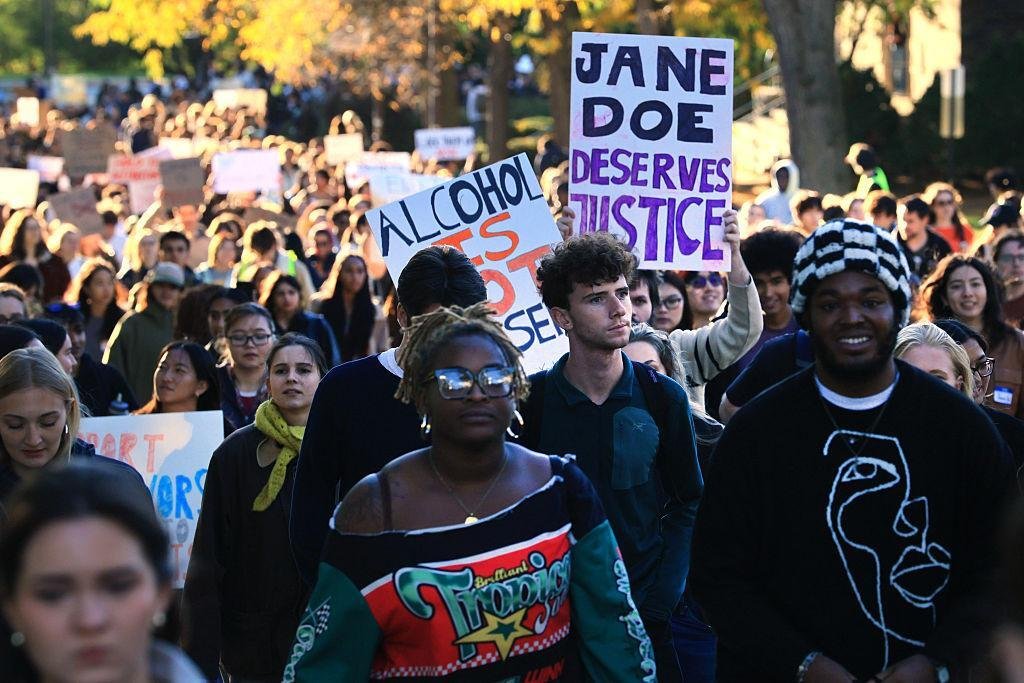
Thousands of students and supporters gathered at Cornell in early October to protest the university’s handling of the allegations. Demonstrators have called for stronger protections for survivors, greater transparency and changes to the university’s disciplinary system.
Cornell has responded by supporting an independent review of how the university handled the case. On Oct. 6, reports said Cornell had selected former U.S. Deputy Attorney General Sally Yates to independently examine the university’s response to the sexual assault allegations.
The university is therefore facing pressure from multiple directions: survivors and their supporters are demanding accountability, while people who say they were incorrectly associated with the case are asking for due process and accurate public information.
Why the former members want a public clarification
For the former Chi Phi members, the issue is not about the reopened criminal investigation itself. Their request is focused on making sure that people who were not students or members of the relevant group in 2024 are not mistakenly identified as participants.
Their attorney has asked Cornell to clarify who was not part of the Snapchat group rather than disclose private student information.
As the Cornell sexual assault investigation continues, the distinction between people named in the lawsuit and former fraternity members who say they were wrongly identified could become increasingly important.
The criminal investigation, civil lawsuit and Cornell’s independent review are separate processes, and none should be treated as proof of criminal guilt before the appropriate legal proceedings are completed.
For now, the former fraternity members are waiting for Cornell to respond to their request for clarification while the broader investigation continues.
More Information: usmedianewz