
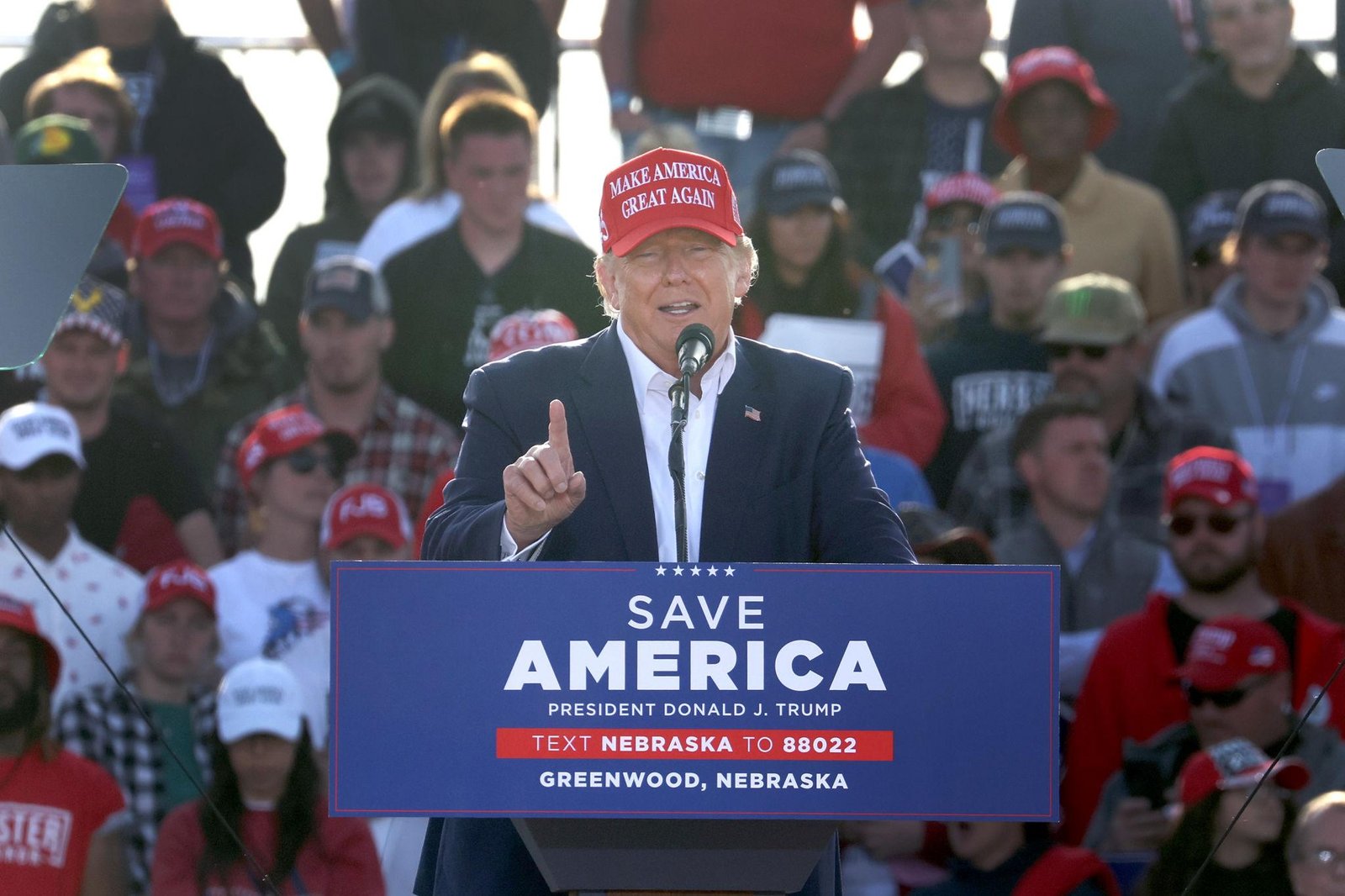
Trump’s Los Angeles and San Diego Comments Trigger Political Firestorm
President Donald Trump’s remarks about Los Angeles and San Diego during a campaign rally in Nebraska have triggered a major political backlash in California, with Gov. Gavin Newsom calling the comments “dangerous — if not treasonous” and lawmakers demanding that the president apologize.
The controversy began during Trump’s rally in Grand Island, Nebraska, on October 5, where he was discussing the economic impact of the ongoing U.S.-Iran conflict. Trump argued that higher prices were a relatively small sacrifice for protecting the United States. He then made comments referring to the possibility of Los Angeles or San Diego being attacked.
Trump said, “Let them take out Los Angeles. Let them take out San Diego,” while describing the potential cost as a “small price to pay.” The crowd responded with cheers, adding to the controversy surrounding the comments.
Gavin Newsom Calls Trump’s Comments Dangerous
Newsom quickly criticized the president on social media, initially describing the comments as “deranged and dangerous.”
On October 6, Newsom issued a stronger official statement through the California governor’s office. He said Trump’s remarks were “dangerous — if not treasonous” and argued that they placed a target on two of California’s biggest cities as well as one of the country’s major naval hubs.
Newsom also said he had directed California’s State Threat Assessment Center to monitor the situation in case foreign actors interpreted Trump’s words as an invitation to target California.
The governor’s response reflects the increasingly bitter political relationship between Trump and California’s Democratic leadership, particularly over national security, immigration, federal military deployments and the U.S.-Iran conflict.
California Lawmakers Demand an Apology
California Democratic members of Congress also called on Trump to apologize for the remarks. According to a statement reported Wednesday, 43 members of the California Democratic congressional delegation signed a demand for an apology to residents of Los Angeles, San Diego and Americans more broadly.
The California Legislative Central Coast Caucus separately called on Trump to retract his comments. The group said the president’s highest responsibility should be protecting Americans and emphasized that residents of Los Angeles and San Diego should not be treated as expendable.
The reaction also crossed party lines.
Republican congressional candidate Jim Desmond, a former mayor of San Marcos and Navy veteran, criticized the idea of treating an American city as an acceptable cost of war. He said the president’s first responsibility is to protect Americans and the homeland.
White House Defends Trump
The White House has rejected the interpretation that Trump was encouraging Iran to attack American cities.
White House Communications Director Steven Cheung said the criticism represented a “media freakout” and argued that Trump was explaining what could have happened if Iran had developed the ability to launch a nuclear attack against American cities.
According to the White House explanation, Trump was making the case that the United States’ actions against Iran were designed to prevent such a threat in the first place.
Fact-checking analysis also noted that Trump’s wording was confusing but said the broader context suggested he was discussing the potential threat posed by Iran rather than explicitly calling for an attack on Los Angeles or San Diego.
Why Los Angeles and San Diego Are at the Center of the Debate
Los Angeles and San Diego are among California’s most important population centers. San Diego is also home to a major U.S. military presence, making references to a possible foreign attack particularly sensitive.
California officials have therefore treated Trump’s remarks as more than ordinary campaign rhetoric. Newsom said the state would continue monitoring the situation, while other officials have argued that presidential statements involving possible attacks on American cities can have serious consequences.
The controversy comes at a politically sensitive time, with the 2026 U.S. midterm elections approaching. Trump’s comments have added another issue to an already heated national debate involving the Iran war, fuel prices, national security and presidential leadership.
For now, the White House and California Democrats remain sharply divided over what Trump meant. Critics say the wording was reckless and unacceptable, while Trump’s allies insist that his comments have been taken out of context.
The dispute is likely to continue as both sides use the incident to make broader arguments about national security and the direction of U.S. foreign policy.