
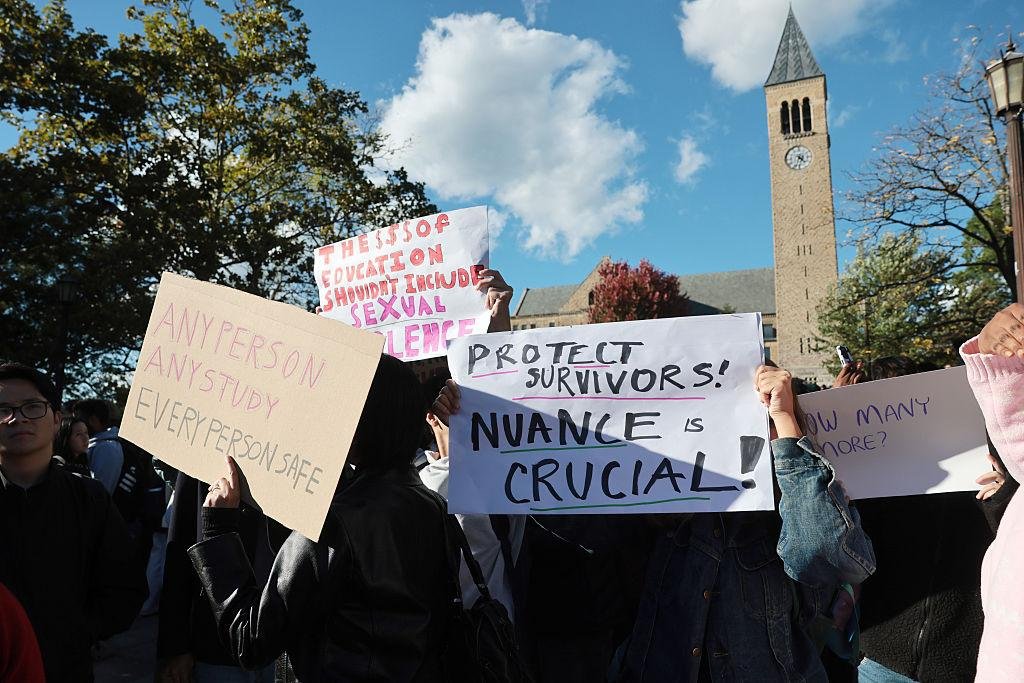
A lawsuit involving seven former Cornell University fraternity members has pushed the complicated issue of sexual consent, campus sexual assault and New York law back into the national conversation.
The case centers on a former Cornell student identified in court documents as Jane Doe, who alleges that she was sexually assaulted by multiple men at the Chi Phi fraternity house in October 2024. She filed a civil lawsuit in September 2026 against seven former fraternity members, Cornell University and other parties. The allegations have not resulted in criminal convictions, and several of the accused have denied wrongdoing.
The case has attracted widespread attention because of questions surrounding what happened that night, how the university handled the complaint and why criminal charges were not initially filed.
Why the Cornell case is attracting national attention
Jane Doe reported the incident to Cornell police several weeks after the alleged assault. According to documents and reporting reviewed by CBS News, Cornell conducted its own disciplinary investigation.
Cornell later expelled two students, suspended two others for at least two semesters, while another student had already graduated. Two others were found not responsible for sexual misconduct, according to CBS.
The criminal investigation took a different path.
Tompkins County District Attorney Matthew Van Houten initially did not bring charges. He later reopened the investigation after the civil lawsuit brought additional allegations and evidence into public view. The prosecutor has said the original statement available to his office described drug use and sexual activity as voluntary and consensual and did not contain the allegations later made in the lawsuit.
That difference between the initial account and later allegations is now an important part of the legal debate.
The “voluntary intoxication” issue
One of the biggest issues raised by the Cornell 7 lawsuit is New York’s treatment of intoxication and sexual consent.
Critics argue that New York’s law can make some sexual assault cases particularly difficult to prosecute when a person voluntarily consumes alcohol or drugs and later becomes too impaired to make meaningful decisions.
The controversy has been described as a “voluntary intoxication loophole.” Supporters of changing the law say the key question should be whether a person was capable of giving consent, rather than whether that person voluntarily consumed alcohol or drugs.
The issue is not new. New York officials and lawmakers have discussed changing the state’s approach to intoxication and consent for years. The Cornell case has now brought renewed pressure for lawmakers to revisit the issue.

New York investigation has been reopened
The legal situation changed significantly after the lawsuit was filed.
New York Gov. Kathy Hochul moved to have the state Attorney General’s Office take over the criminal investigation. Attorney General Letitia James was appointed special prosecutor through an executive order signed in October.
James said her office would conduct an investigation guided by the facts and the law.
The reopened investigation means the allegations are once again being examined by law enforcement. However, the investigation is ongoing, and the accusations in the lawsuit should not be treated as proven criminal findings.
Cornell also faces questions
The controversy is not limited to the seven accused former students.
Cornell University has faced criticism over its handling of the complaint, its disciplinary process and the role of campus police. In response, Cornell announced that former U.S. Deputy Attorney General Sally Yates will lead an independent review of the university’s handling of sexual misconduct complaints.
The review will examine Cornell’s investigation and disciplinary procedures, campus police response and oversight of fraternities and other student organizations.
The university’s response has become an important part of the broader campus sexual assault debate, particularly around how colleges should handle allegations while also protecting due-process rights for accused students.
What happens next?
The Cornell sexual assault case is likely to remain under intense public scrutiny as the special prosecutor’s investigation continues.
At the center of the debate are several difficult questions: What legally constitutes consent? How should intoxication affect a person’s ability to consent? How should universities investigate sexual misconduct? And how can authorities protect alleged survivors while ensuring that people accused of serious crimes receive due process?
For now, the Cornell 7 case remains an ongoing legal matter rather than a final judgment. The renewed investigation could ultimately determine whether criminal charges are appropriate and whether New York lawmakers decide that the state’s sexual consent laws need to change.
The case has already made one thing clear: the debate over sexual consent, college sexual assault and intoxication laws in America is far from over.